
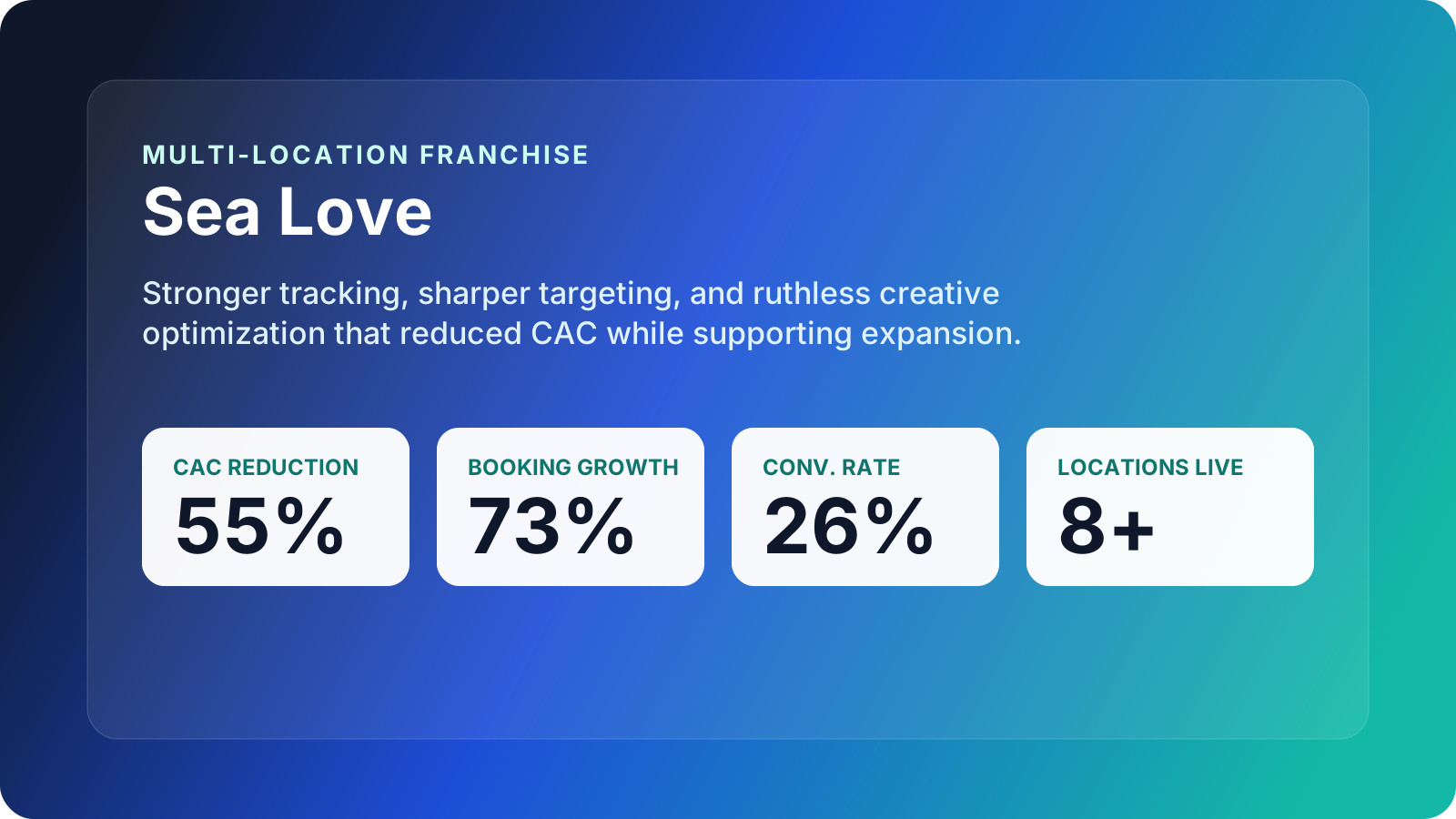
At a Glance
Before
- No reliable conversion tracking
- High CAC on Google and Meta
- Campaigns optimized for Max Clicks
- Broad untargeted audiences
After
- Conversion tracking infrastructure in place
- Max Conversions strategy rolled out
- 55% CAC reduction achieved
- Scaled to 8+ locations
Key Metrics
Client Overview
Sea Love is a paint-your-own-pottery and creative experience franchise built around social occasions like girls' nights, date nights, and celebrations. The business model depends on efficient local acquisition and repeatable location launches.
When the engagement began in August 2024, Sea Love operated in two locations with basic campaign structure, no robust conversion tracking, and customer acquisition costs that made scaling difficult.
Reduce acquisition costs, improve booking quality, and create a performance marketing system that could support expansion into multiple new markets.
The Challenge
Scaling a multi-location local business requires more than spend. It requires tighter control over signal quality, market-level targeting, and creative discipline.
No Conversion Tracking
Neither Google Ads nor Meta had a strong enough tracking setup to measure true booking performance or support optimization.
High Customer Acquisition Cost
Google cost per booking was $13 and Meta was $9 — too high for profitable multi-location scale.
Poor Campaign Optimization
Campaigns prioritized Max Clicks instead of actual conversions, which wasted budget on traffic without booking intent.
Broad Audiences
Without sharper segmentation, ads were reaching everyone instead of the ideal social-experience customer profile.
Our Strategic Approach
We rebuilt the account around four priorities: measurement, structure, targeting, and creative quality — then used that system to support expansion.
Conversion Tracking Infrastructure
- Added location IDs to Book Now actions so bookings could be tracked accurately across multiple locations.
- Built primary booking events for Google Ads and Meta, plus secondary events to analyze button-click intent.
- Resolved conversion tracking issues across Savannah, Atlanta, and other locations.
Campaign Structure Overhaul
- Shifted campaigns from Max Clicks to Max Conversions.
- Separated locations with dedicated budgets and messaging.
- Applied cross-location negatives and stronger brand/non-brand segmentation.
- Reallocated budget from weaker locations to stronger performers like Naperville and Freeport.
Audience Precision Targeting
- Excluded men from targeting where the core audience was women seeking social experiences.
- Layered household income and age optimization by market.
- Refined geo-targeting and built custom audiences for remarketing.
Creative Optimization Strategy
- Scaled the Girls Squad creative that drove 70%+ of bookings.
- Paused redundant evergreen ads with weak performance.
- Used existing organic posts as ads and launched seasonal offers to drive urgency.
- Adjusted placements and switched off Advantage+ targeting for tighter control.
Multi-Location Expansion
- Rolled out campaigns across Estero, Freeport, Newport, Savannah, Liberty Township, Atlanta, Pasadena, Oak Park, and Kennebunkport.
- Used different campaign objectives depending on market maturity.
- Paused underperforming locations temporarily to protect overall efficiency.
The Results
Meta cost per booking fell from $9 to $4 on Naperville.
Naperville grew from 27 bookings to 136 monthly at peak.
Google Ads conversion rate reached 26% in Naperville.
The system supported expansion from 2 locations to 8+ live markets.
Key Takeaway
Precision targeting and creative discipline made scaling profitable.
Sea Love's growth was driven by focus, not complexity. Once the team had proper tracking, better audience definition, and clear creative winners, the account could scale much more efficiently.
- The Girls Squad creative became a major growth lever rather than just another ad test.
- Audience exclusions and income targeting reduced wasted impressions.
- Conversion-first bidding aligned platform algorithms with actual bookings.
The outcome was a multi-location acquisition model capable of supporting both efficiency and expansion.