
At a Glance
Before
- Manual budget management for 119 centers
- Schedule Assessment used as the primary goal
- Unqualified leads wasting budget
- No portfolio bid strategies
- 3,500 bookings per month baseline
- Inconsistent pacing across locations
After
- Automated budget tracker with daily alerts
- Book Appointment as primary conversion
- Qualified leads based on actual bookings
- Portfolio bid strategies by campaign type
- 7,000+ bookings per month
- 100% YoY growth achieved
Key Metrics
The Challenge
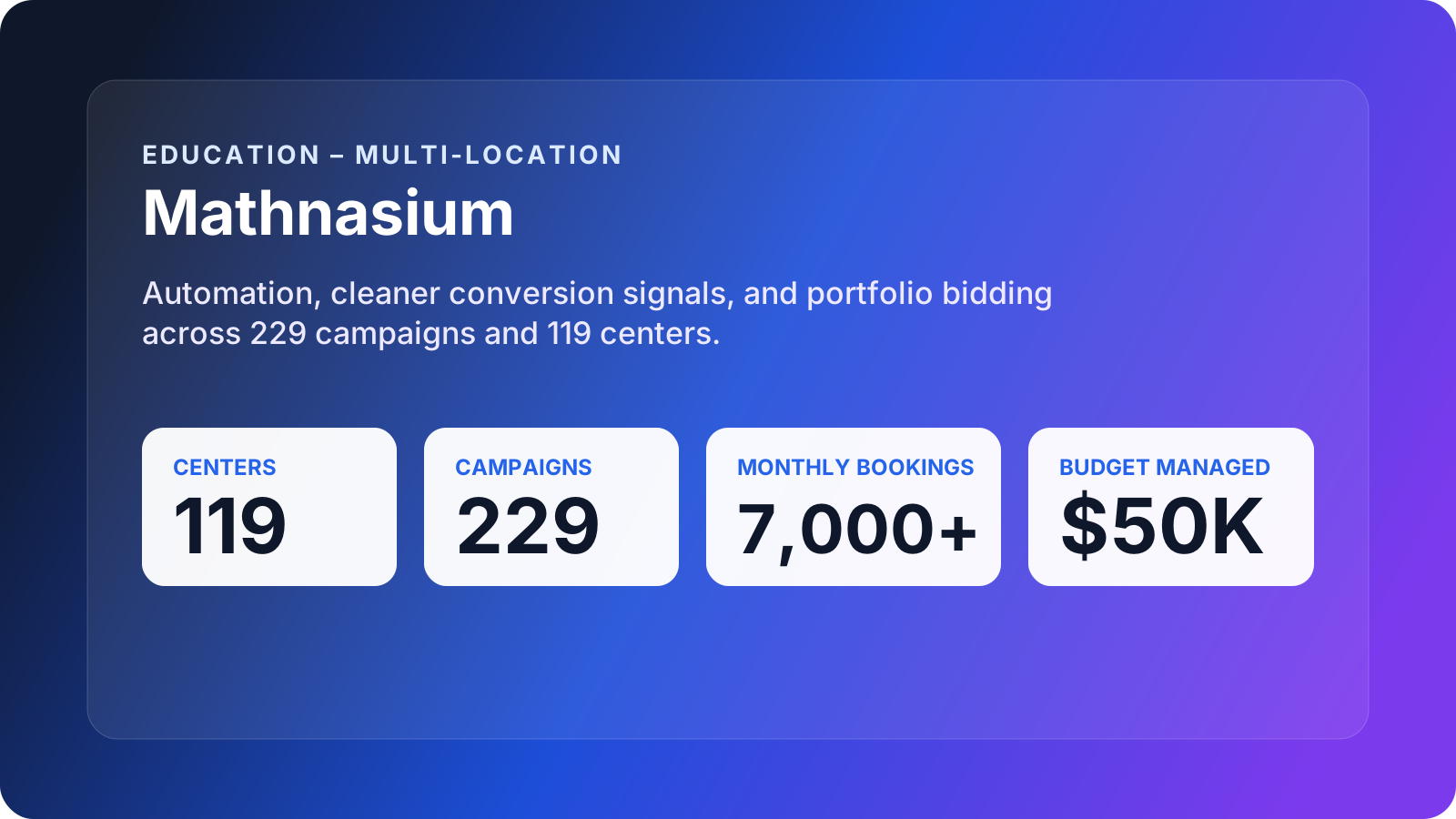
Managing 229 campaigns across 119 centers demanded more than better ads. It required operational systems, cleaner conversion signals, and a bidding approach that could scale.
Multi-Location Budget Management Chaos
Manual budget monitoring across Search and Performance Max campaigns was slow, inconsistent, and impossible to scale efficiently.
Unqualified Lead Generation
The account optimized for Schedule Assessment button clicks rather than completed bookings, sending the algorithm the wrong signal.
No Strategic Bid Management
Individual bidding strategies prevented centers from sharing learnings and created weak budget pacing by month-end.
Our Strategic Approach
We treated the problem as both an operations challenge and a media optimization challenge.
Custom Budget Tracker with Automated Alerts
- Built a Google Sheets tracker with Google Ads API integrations and Apps Script automation.
- Grouped spend by Search and Performance Max, monitored budget pacing daily, and sent automated color-coded alerts.
- Gave the team a center-by-center dashboard and eliminated hours of manual work.
Conversion Goal Optimization
- Changed the primary goal from Schedule Assessment to Book Appointment.
- Ensured conversion fires only after a completed booking on the confirmation page.
- Shifted optimization toward qualified leads instead of low-value clicks.
Portfolio Bid Strategies + Seasonality
- Implemented portfolio bidding separately for Search and Performance Max campaigns.
- Allowed similar locations to share data and learn faster.
- Applied seasonality adjustments for back-to-school surges and holiday slowdowns to improve pacing.
The Results
Monthly bookings doubled from the 3,500 baseline across 119 centers.
Appointment volume doubled while maintaining the same overall monthly budget.
Budget tracking and daily alerting replaced hours of manual checks.
Optimization now focused on completed appointments rather than button clicks.
Key Takeaways
Automation and better conversion signals changed the economics.
- Operational automation freed the team to focus on strategy instead of daily budget policing.
- Optimizing for actual bookings improved lead quality and booking-to-enrollment outcomes.
- Portfolio strategies helped similar campaigns share data and accelerate learning across the network.
- Seasonality adjustments improved pacing for an education business with highly cyclical demand.
The result was not just more volume. It was a more scalable paid media operating system for a multi-location brand.